

Lap Joint Flange UK
Carbon & Stainless Steel Lap Joint Flanges
for Industrial Pipework
MDS Petrochemical supply high quality lap joint flange products for industrial pipework systems across petrochemical, oil and gas, offshore, manufacturing and process engineering sectors. Our range includes carbon steel, stainless steel, duplex and specialist alloy lap joint flanges manufactured to recognised international standards for demanding industrial applications. Find out more about our flange products.
Get in touch to find out more about our lap joint flange products
Lap joint flanges are commonly used in piping systems requiring frequent dismantling, inspection or maintenance. Their two-piece design allows the flange to rotate around the stub end, helping simplify pipe alignment and installation while maintaining reliable performance across industrial environments.
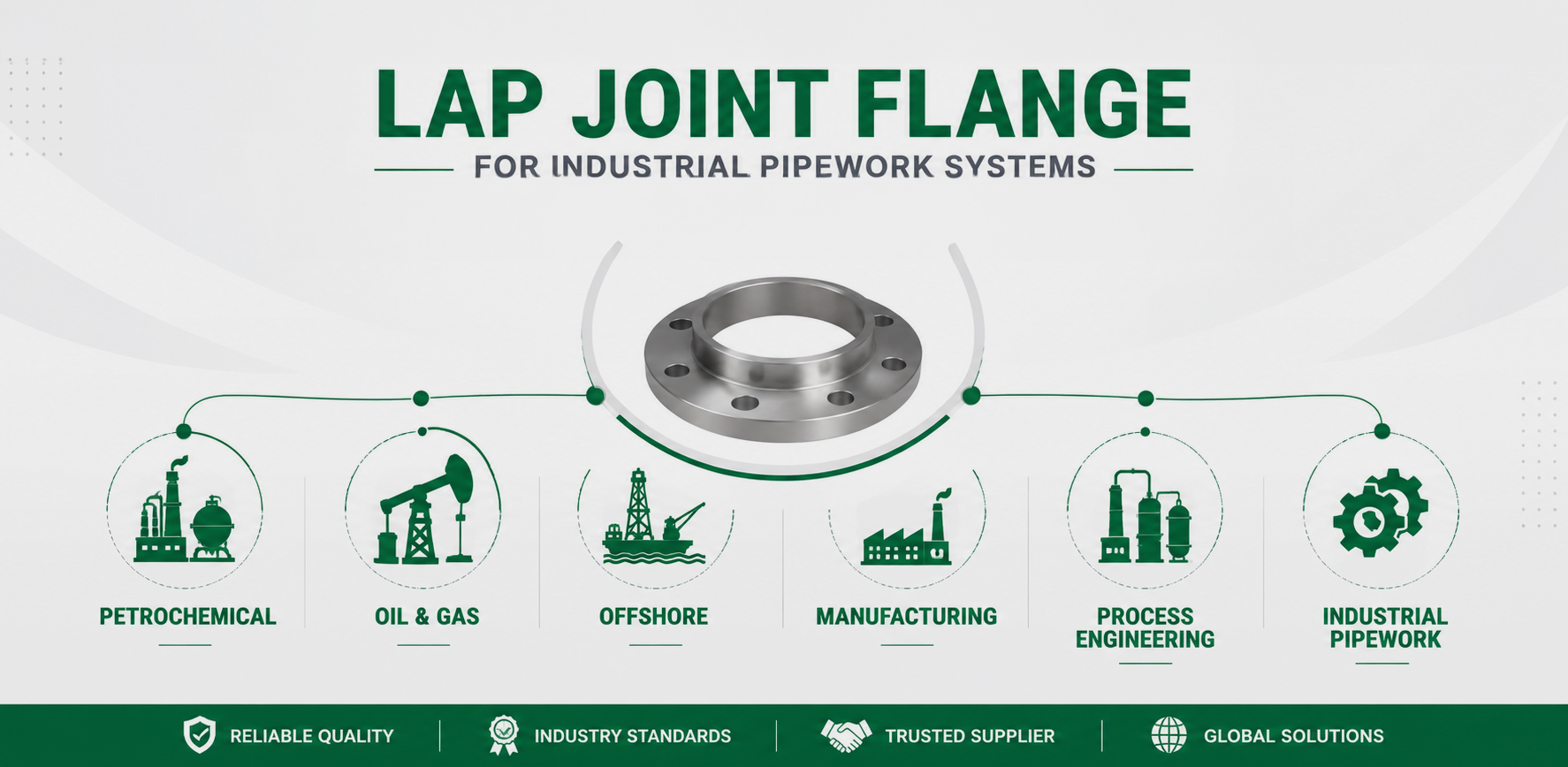
What is a Lap Joint Flange?
A lap joint flange is a two-piece flange assembly used with a stub end fitting to create a bolted pipe connection within industrial pipework systems. Unlike welded flanges, the flange itself is not directly welded to the pipe, allowing it to rotate freely around the stub end for easier alignment during installation.
Time critical lap joint flanges are commonly used in applications where regular dismantling, inspection or maintenance may be required. Their rotating design helps simplify bolt hole alignment and can reduce installation time within more complex pipework systems.
These flanges are widely specified across petrochemical, oil and gas, offshore, chemical processing and industrial manufacturing environments where flexibility, accessibility and long-term maintenance efficiency are important. Lap joint flanges are also frequently used within stainless steel and specialist alloy pipework systems where cost-efficiency and corrosion resistance are key considerations.
Available in multiple sizes, pressure ratings and material grades, lap joint flanges provide a practical and reliable solution for industrial systems requiring durable bolted connections with improved installation flexibility.

Benefits of Lap Joint Flanges
Lap joint flanges are widely used across industrial pipework systems due to their flexibility, ease of installation and long-term maintenance advantages. Their two-piece design allows the flange to rotate freely around the stub end, helping simplify bolt alignment during installation and reducing fitting difficulties within more complex pipework layouts.
One of the main advantages of lap joint flanges is easier pipe alignment. Because the flange can rotate independently of the pipe, engineers can align bolt holes more efficiently during assembly, helping speed up installation and reduce on-site fitting challenges. View our flange products here.
Lap joint flanges also support simpler installation procedures compared with some welded flange types. Their design can help reduce labour time while improving accessibility within systems requiring frequent dismantling or inspection.
Another key benefit is the reusable flange backing. In many applications, the backing flange can be reused when replacing the stub end or pipe section, helping reduce long-term operational and replacement costs across industrial systems. View our sectors.
Reduced material costs are also a common advantage, particularly within stainless steel or specialist alloy pipework systems. The stub end can be manufactured from a higher-grade material while the backing flange uses a more economical material grade, helping improve cost-efficiency without compromising performance where it matters most.
Lap joint flanges are widely specified for systems requiring regular maintenance accessibility. Their design makes dismantling and reassembly easier during inspection, cleaning or repair work, particularly within petrochemical, chemical processing and industrial manufacturing environments.
Their flexibility within pipework systems also makes lap joint flanges suitable for applications where alignment adjustments, thermal movement or future modifications may be required over time.
Lap Joint Flange Specifications
MDS Petrochemical supply lap joint flanges manufactured to recognised international standards for demanding industrial pipework applications across multiple sectors.
ANSI / ASME Standards
Lap joint flanges can be supplied to recognised ANSI and ASME specifications for industrial piping systems requiring consistent dimensional and performance standards.
DIN & BS Standards
DIN and BS standard lap joint flanges are available for European and UK industrial pipework applications across multiple sectors and operating environments.
Pressure Ratings
Available in multiple pressure classes and PN ratings to suit low, medium and high-pressure industrial systems and project requirements.
Stub End Compatibility
Lap joint flanges are designed for use alongside stub end fittings, allowing easier alignment and greater flexibility during installation and maintenance.
Flange Facings
Multiple flange facing options are available including raised face, flat face and specialist configurations depending on sealing and system requirements.
Sizes & Schedules
Lap joint flanges are available in a wide range of sizes and schedules to suit varying pipe diameters, operating pressures and industrial applications.
Wall Thickness Options
Various wall thicknesses are available depending on pressure requirements, system design and the selected pipe schedule specification.
Material Grades
Supplied in carbon steel, stainless steel, duplex, super duplex and specialist alloy grades for demanding industrial and corrosive environments.
Industrial Applications
Suitable for petrochemical, offshore, manufacturing, process engineering and industrial pipework systems requiring reliable bolted flange connections.
Where Lap Joint Flanges Are Used
Lap joint flanges are widely used across industrial sectors where flexibility, accessibility and efficient maintenance are important within pipework systems. Their rotating flange design makes them particularly suitable for applications requiring easier alignment, regular dismantling or ongoing inspection access.
Within the petrochemical industry, lap joint flanges are commonly used across processing systems and industrial pipework where reliable bolted connections and corrosion resistance are essential. Offshore and oil and gas environments also frequently utilise lap joint flanges due to their practicality within complex piping systems operating under demanding industrial conditions. All products are manufactured with sustainability in mind.
Lap joint flanges are regularly specified throughout process engineering and chemical processing applications where maintenance accessibility and long-term operational efficiency are important. Their design can help simplify installation and reduce downtime during inspection or replacement procedures.
In food production and pharmaceutical environments, stainless steel lap joint flanges are often selected due to their corrosion resistance, cleanability and suitability for hygienic process systems. They are commonly used within stainless steel pipework where system cleanliness and efficient maintenance access are priorities.
Across industrial pipework systems generally, lap joint flanges remain a reliable and cost-effective solution for applications requiring flexibility, alignment efficiency and dependable long-term flange performance.
Lap Joint Flange vs Slip On Flange
Lap joint flanges and slip on flanges are both widely used across industrial pipework systems, but each offers different advantages depending on installation requirements, maintenance access and operational conditions.
Installation
Lap joint flanges allow easier bolt hole alignment due to their rotating flange design, while slip on flanges are fitted directly over the pipe before welding into position.
Flexibility
Lap joint flanges offer greater flexibility within pipework systems because the flange can rotate independently around the stub end during installation and maintenance.
Maintenance
Lap joint flanges are commonly preferred for systems requiring regular dismantling or inspection, while slip on flanges are generally more permanent once welded into place.
Welding Requirements
Slip on flanges require welding directly to the pipe, whereas lap joint flanges are used with a separate stub end fitting which reduces direct flange welding requirements.
Cost Considerations
Lap joint flange systems can help reduce material costs in stainless steel and specialist alloy applications by allowing the backing flange to use a more economical material grade.
Typical Applications
Lap joint flanges are widely used across petrochemical, pharmaceutical and process systems requiring flexibility and maintenance access, while slip on flanges are often used within general industrial pipework systems.
Trusted Lap Joint Flange Supply for Industrial Applications
MDS Petrochemical supply high quality lap joint flanges and industrial pipework components for demanding projects across the UK and worldwide.
Decades of Experience
Our team have decades of experience supplying industrial flange products and pipework solutions across multiple demanding sectors.
ISO Standards
Products are supplied to recognised ISO and international industry standards to help ensure quality, consistency and reliability.
UK Distribution
MDS Petrochemical provide efficient UK distribution for industrial flange products and specialist pipework components.
Worldwide Delivery
Worldwide delivery options are available to support industrial projects, shutdowns and infrastructure requirements across multiple sectors.
Technical Support
Technical guidance is available throughout the process including material selection, specifications and application support.
Bespoke Flange Solutions
We can assist with bespoke flange solutions and difficult-to-source industrial components for specialist project requirements.
Lap Joint Flange FAQs
What is a lap joint flange used for?
A lap joint flange is used to create a bolted pipe connection when easier alignment, dismantling or maintenance access is required. It is commonly used with a stub end fitting in industrial pipework systems across petrochemical, oil and gas, offshore, chemical processing and manufacturing applications.
What is the difference between a lap joint flange and slip on flange?
A lap joint flange is used with a stub end and can rotate freely to help with bolt hole alignment. A slip on flange slides directly over the pipe and is welded into position. Lap joint flanges are usually preferred where maintenance access and flexibility are important, while slip on flanges are often used for more permanent welded connections.
Why are lap joint flanges used with stub ends?
Lap joint flanges are used with stub ends because the stub end provides the sealing face and welded pipe connection, while the backing flange remains loose and able to rotate. This helps make installation, alignment, dismantling and maintenance easier within industrial pipework systems.
Are lap joint flanges suitable for high pressure systems?
Lap joint flanges can be supplied in a range of pressure ratings depending on the required standard, material grade and application. They are often used where accessibility and alignment are priorities, but the correct flange type should always be selected based on pressure, temperature, pipework design and operating conditions.
What materials are lap joint flanges available in?
Lap joint flanges are available in a wide range of materials including carbon steel, stainless steel, duplex, super duplex, nickel alloy and high yield grades. The most suitable material will depend on the application, corrosion risk, temperature, pressure and industry requirements.
What standards do lap joint flanges follow?
Lap joint flanges can be manufactured and supplied to recognised standards including ANSI, ASME, DIN and BS specifications. These standards help define dimensions, pressure ratings, flange facings, material grades and performance requirements for industrial pipework systems.
Are stainless steel lap joint flanges corrosion resistant?
Yes, stainless steel lap joint flanges offer strong corrosion resistance and are commonly used in environments where moisture, chemicals or corrosive conditions may be present. They are often specified for chemical processing, food production, pharmaceutical, water treatment and general industrial applications.
Can lap joint flanges be supplied worldwide?
Yes, MDS Petrochemical can supply lap joint flanges across the UK and worldwide. We support standard flange requirements, bespoke flange solutions and difficult-to-source industrial components for projects across multiple sectors.